CrushSCI reveals real review times for each journal, giving authors transparent guidance for submission. As AI makes publishing increasingly challenging, the platform helps authors improve submission efficiency. Contact us if you need assistance.
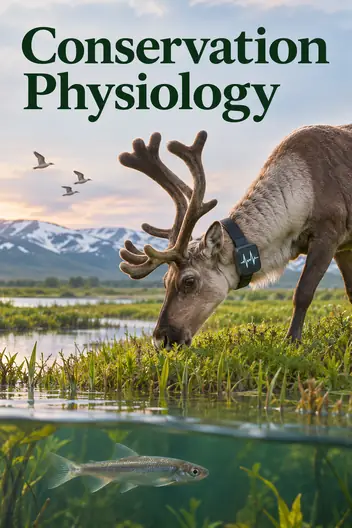 Environmental Sciences & Ecology
Paper Review Records
All Paper Review Records
11 valid samples · Newest publication first
Review days = acceptance date − received date. PDF, DOI, and publisher-page sources are retained.
75
days
Speed at the edge of stability: a recovery-limited model of metabolic flux in the cheetah
Authors
Adrian S W Tordiffe; Tertius KohnShow moreShow less
Affiliations
1. Greens Zoological Rescue and Rehabilitation Centre, SSO, A5, Village Moti Khavdi, District Jamnagar, Gujarat 361142, India; 2. Department of Paraclinical Sciences, Faculty of Veterinary Science, University of Pretoria, Soutpan Road, Onderstepoort 0110, Gauteng, South Africa; 3. Department of Medical Biosciences, Faculty of Natural Sciences, University of the Western Cape, Robert Sobukwe Road, Bellville 7535, South AfricaShow moreShow less
183
days
Beyond the hatchery: testing managed wetland impoundments as semi-natural rearing habitat for endangered Delta Smelt
Authors
Florian Mauduit; Dennis E Cocherell; Shawn Acuña; Nann A FangueShow moreShow less
Affiliations
1. Fish Conservation Physiology Laboratory, Department of Wildlife, Fish and Conservation Biology, University of California, Davis, 1 Shields Avenue Davis CA95616, USA; 2. Metropolitan Water District of Southern California, 700 North Alameda Street Los Angeles, CA 90012-2944, USAShow moreShow less
97
days
A migratory herbivore responds to rapid changes in food supply: diet and body condition of an arctic caribou herd at onset of green-up
Authors
Cecelia J Giesen; Joelle Hepler; Shawna A Karpovich; Christopher S Swingley; Perry S BarbozaShow moreShow less
Affiliations
1. Department of Ecology and Conservation Biology, Texas A&M University, Wildlife, Fisheries, and Ecological Sciences Building, 534 John Kimbrough Blvd, College Station, TX 77843, USA; 2. Department of Wildlife Conservation, Department of Wildlife Conservation, Alaska Department of Fish & Game, 1300 College Rd, Fairbanks, AK 99701, USA; 3. ABR, Inc.—Environmental Research & Services, 2842 Goldstream Road, Fairbanks, AK 99709, USAShow moreShow less
164
days
Heart rate biologging as a tool to understand the energetic needs of life history states
Authors
Clare Stawski; Fritz Geiser; Gerhard Körtner; Shannon CurrieShow moreShow less
Affiliations
1. School of Science, Technology and Engineering, University of the Sunshine Coast, 90 Sippy Downs Drive, Sippy Downs, Queensland 4556, Australia; 2. Centre for Behavioural and Physiological Ecology, Zoology, University of New England, Elm Avenue, Armidale, New South Wales 2351, Australia; 3. School of BioSciences, University of Melbourne, Grattan Street, Parkville 3010, AustraliaShow moreShow less
172
days
Resource use and associated energy expenditure of African crowned eagles (Stephanoaetus coronatus) in an urban-forest mosaic landscape
Authors
Lara Howard; Varalika Jain; Shane C Sumasgutner; Jesús Bautista; Ralph Buij; Colleen T Downs; Susan J Cunningham; Petra SumasgutnerShow moreShow less
Affiliations
1. FitzPatrick Institute of African Ornithology, Department of Biological Sciences, University of Cape Town, Private Bag X3, Rondebosch, Cape Town 7701, South Africa; 2. Konrad Lorenz Research Center for Behavior and Cognition, Core Facility of the University of Vienna, Fischerau 13, Grünau im Almtal 4645, Austria; 3. Department of Behavioral and Cognitive Biology, University of Vienna, Djerassiplatz 1, Vienna 1030, Austria; 4. Centre for Functional Biodiversity, School of Life Sciences, University of KwaZulu-Natal, Carbis Road, Scottsville, Pietermaritzburg 3209, South Africa; 5. Wilder South NGO, Camino de San Antonio No. 9, Cármenes de Aynadamar, House 16, Granada 18011, Spain; 6. Animal Ecology Group (AEG), Wageningen Environmental Research, PO Box 47, Wageningen 6700 AA, The Netherlands; 7. The Peregrine Fund, 5668 West Flying Hawk Lane, 83709 Boise, ID, USAShow moreShow less
146
days
Burst swimming in sockeye salmon during their 1100 km upstream migration
Authors
Kim Birnie-Gauvin; Kendra A Robinson; Evan E Byrnes; Jacey C Van Wert; Jeremy G Venditti; Steven J Cooke; Erika J Eliason; David A PattersonShow moreShow less
Affiliations
1. Department of Ecology, Evolution and Marine Biology, University of California Santa Barbara, Santa Barbara, CA 93106, USA; 2. Section for Freshwater Fisheries and Ecology, Technical University of Denmark, Vejlsøvej 39, 8600 Silkeborg, Denmark; 3. Department of Fisheries and Oceans, Aquatic Research Cooperative Institute, School of Resource and Environmental Management, Simon Fraser University, Burnaby, BC V5A 1S6, Canada; 4. School of Environmental Science, Simon Fraser University, Burnaby, BC V5A 1S6, Canada; 5. Oceans Department, Doerr School of Sustainability, Hopkins Marine Station, Stanford University, Pacific Grove, CA 93950, USA; 6. Fish Ecology and Conservation Physiology Laboratory, Department of Biology and Institute of Environmental and Interdisciplinary Science, Carleton University, 1125 Colonel By Drive, Ottawa, ON K1S 5B6, Canada; 7. Pacific Science Enterprise Centre, Fisheries and Oceans Canada, West Vancouver, BC V7V 1H2, CanadaShow moreShow less
FAQ
How long does Conservation Physiology take to review a manuscript?
As of 2026-11-19, CrushSCI has 11 complete review records for Conservation Physiology. The fastest paper went from submission to acceptance in 3 days (Tips and tricks for addressing and responding to peer reviews, received 2026-03-24, accepted 2026-03-27); the slowest took 219 days. The average is 136.5 days and the median is 146 days. The fastest record has an unusually short interval; please check the original source.
Expert Matching · Case Demo
Turn Your Submission Goalsinto a Verifiable Journal Plan
Share your field, deadline, and author profile. CrushSCI uses real review records to suggest a title direction, shortlist journals, and estimate timelines.

